Introduction
In Los Angeles, Jewish life does not unfold in isolation. It unfolds in neighborhoods, schools, civic spaces, and homes where multiple cultures and faith traditions intersect. For Hillside Memorial Park, which proudly serves interfaith families, the question is not whether interfaith values belong within Jewish community, but how they actively strengthen it.
Rabbi Calvin Dox-DaCosta of Temple Israel of Hollywood sees interfaith diversity not as a compromise of Jewish identity, but as a catalyst that deepens it. In his words, interfaith values do not dilute Judaism. They call it forward.
A Living Chain of Tradition
To understand interfaith values in Jewish life, Rabbi Dox-DaCosta begins with Reform Judaism’s orientation toward action and continuity.
“I think that, by way of answering that, I will just articulate that we as Reform Jews are guided by action,” he explains. “So there is, there's obviously belief. There's obviously spiritual, spirituality and connectivity to the divine. All that, that all exists right, through prayer, through ritual, all of that exists for Reform, for modern Reform Jews, a lot of that exists to potentially tap into something more divine and to connect with the universe and God.”
For many Reform Jews, ritual and tradition are not simply inherited habits. They are conscious choices made in relationship to the past and the future. “More times than not, Reform Jews are engaging in ritual practice, holiday, all that stuff, in order to feel connected to their ancestors,” Rabbi Dox-DaCosta says. “It's not just for the idea of survival and to keep it alive, just for the sake of keeping it alive, just because it's tradition. But I think that there is that very acute awareness of like, whoa. This has been happening for a really long time.”
Interfaith relationships, he suggests, sharpen that awareness. They create an “acute awareness of that tradition in a way that I think we take for granted as Jews.” They offer an opportunity for education on both sides: “I think that interfaith brings in this huge new dynamic of educating not only the non Jew, but also the Jew, right, the person who potentially grew up as Jewish and takes it for granted.”
For Rabbi Dox-DaCosta, interfaith values are therefore twofold: “I think it's partly to continue educating non Jews, but also to feel empowered and to own that part of our identity in a way that perhaps we were glossing over.” Far from weakening Jewish identity, interfaith relationships can help “reclaim the vibrancy of our Jewish practice and beliefs.”
Rooted in Text, Called to Action
Interfaith values are not a modern invention. Rabbi Dox-DaCosta sees them embedded in the Jewish textual tradition from the beginning.
“I think there's an awareness throughout the different textual traditions that Jews do not live by themselves,” he says. “It shows up over and over and over again, as far back as the Torah, as far back as the Mishnah and the Talmud and each kind of written, textual evolution of our identity.”
Throughout Jewish history, Jews have lived among others, and Jewish law and ethics reflect that reality. “We see that Jews are constantly interacting with other cultures and other traditions,” Rabbi Dox-DaCosta notes, alongside guidance “to be respectful enough to those people that we are, we're trying to, of course, put boundaries around what is ours… and to also recognize that there are others whom we are living amongst.”
He references the familiar Torah’s call to remember the experience of being strangers, as well as the instruction not to “stand idly by” when a neighbor is harmed. The moral concern is expansive. “It doesn't say, don't stand over a fellow Jews blood. It's don’t stand over your neighbor’s blood,” he emphasizes.
For Reform Jews especially, this prophetic tradition of action remains central. “The prophets were really shouting from the rooftops ‘the belief stuff is lovely, but God really wants action.’ God wants us to treat others well.”
That moral impulse carried forward into modern American Jewish life. “During the Civil Rights Movement here in America, that was at the forefront of what we were called to do. We were called to stand with our brothers and our sisters. We were called to fight on their behalf and fight with them and take their lead.”
Today's interfaith work, Rabbi Dox-DaCosta suggests, stands firmly in that lineage. “Especially Reform, liberal, progressive Jews have always looked out to their community to say, ‘How can we help? We were oppressed. We don't want this to happen to anyone else.’”
Shared Values, Shared Responsibility
In a diverse city like Los Angeles, interfaith collaboration becomes both practical and principled. Rabbi Dox-DaCosta speaks of Temple Israel of Hollywood’s involvement with LA Voice, a network of clergy across traditions working toward justice.
“We are a collective here in Los Angeles, using our leadership responsibilities and our power that we have within our individual communities,” he explains. “We're leveraging that in the larger collective of Los Angeles, making sure that LA feels like a place that is open and welcome to everyone.”
Importantly, this work does not erase differences. “We may not see eye to eye on everything, and that's okay, as long as we're respectful and use our positions of leadership responsibly, such that we're supporting one another.”
He sees this as a broader model for civic unity. “We're not necessarily championing any particular faith causes or religious based causes. We're using our faith and our religious values in order to enact change where we deem it necessary, within the civic framework.”
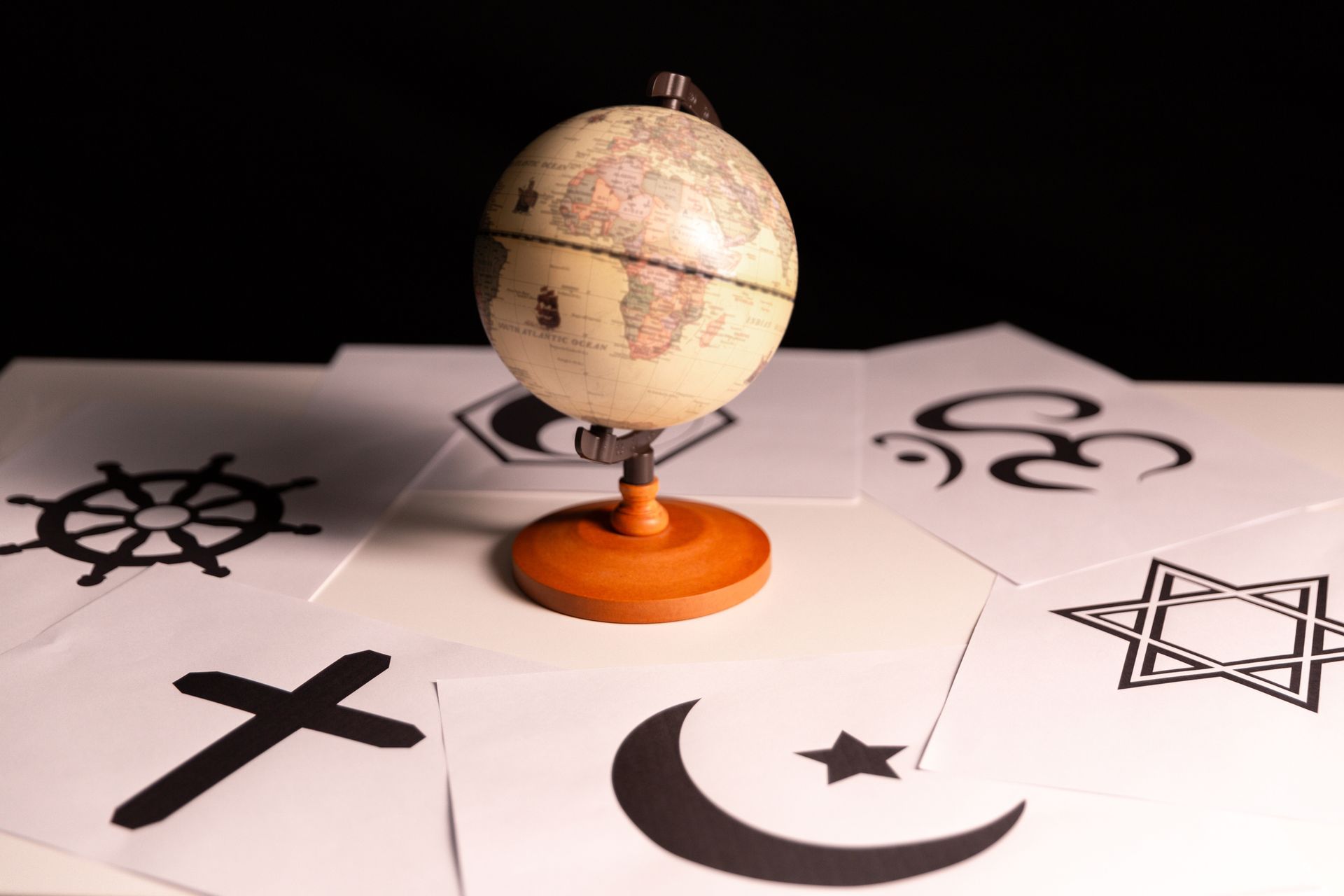
Part of what makes this possible is shared theological ancestry. “It definitely helps that the bigger religions in this world happen to be Abrahamic at their core,” Rabbi Dox-DaCosta observes. “We're all based on the same principles and the same values. And so there's a natural inclination to lean into that and to say, look, we are all one people.”
That shared foundation makes cooperation feel less like compromise and more like continuity. “We have that as a starting place already,” he says, “so that the conversation is a little bit easier from that point.”
A Door Worth Walking Through
For individuals who may feel uncertain about whether they belong in a synagogue, Rabbi Dox-DaCosta offers both empathy and invitation.
“I think that the choice to enter the building is already a brave one to be honored,” he says. Feeling out of place is natural. “You're entering a community that is established, cohesive, and connected. Those feelings of anxiety and nerves are totally natural.”
Still, he encourages people to step through the door. “I would just encourage people to come to step through the door,” he says. “The rabbis are pretty good about recognizing when there's new people and approaching them and introducing themselves.”
Temple Israel of Hollywood has recently taken concrete steps to embody that welcome. “Just last year, we passed a resolution to allow that to happen,” Rabbi Dox-DaCosta explains, referring to amendments that enable non-Jews to become temple members and even serve on the board of trustees. The decision reflected lived reality. “We've seen so many interfaith families with the non Jewish spouse, the non Jewish partner, being the more active one in our community… Why don't we lean into that?”
His answer is clear: “They are not Jewish by birth, have no interest in converting, and they clearly care about this community and care about the Jewish people. Let's honor that.”
Honoring the Bonds That Hold Us
Interfaith values do not stand at the margins of Jewish life. They are woven into its texts, its prophetic voice, its historical struggles, and its modern commitments. They remind Jewish communities that tradition is not a wall to hide behind, but a foundation from which to act.
In Rabbi Calvin Dox-DaCosta’s vision, interfaith engagement strengthens Jewish identity because it demands clarity, courage, and generosity. It calls Jews to know who they are, to act on what they believe, and to stand with others in pursuit of justice.
When spouses, partners, neighbors, fellow clergy walk alongside the Jewish community, they are not surrendering something sacred. They are living it.