
Dear Mom: Three Voices on the Gifts Mothers Leave Behind

April 30, 2026

Dear Mom: Three Voices on the Gifts Mothers Leave Behind
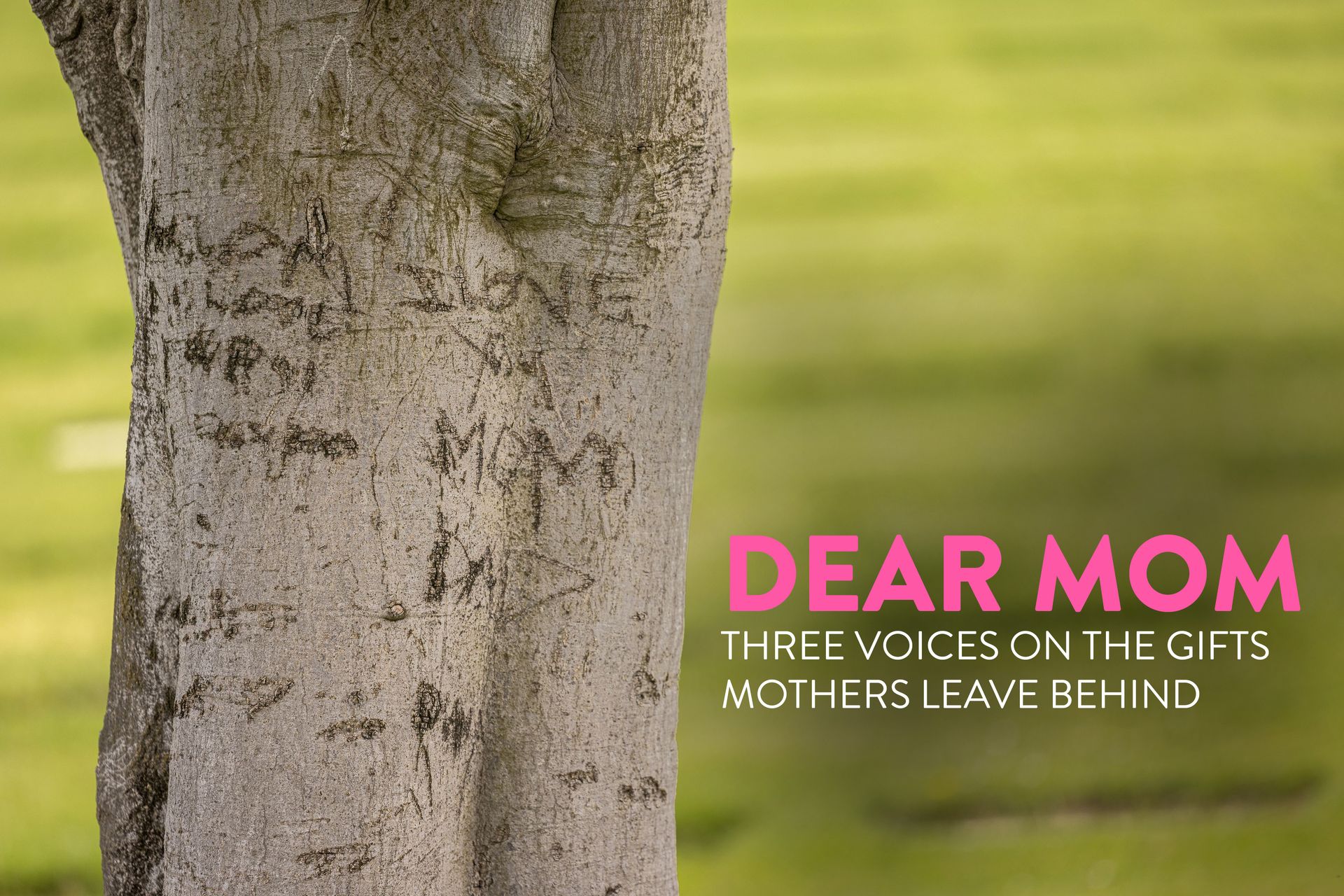
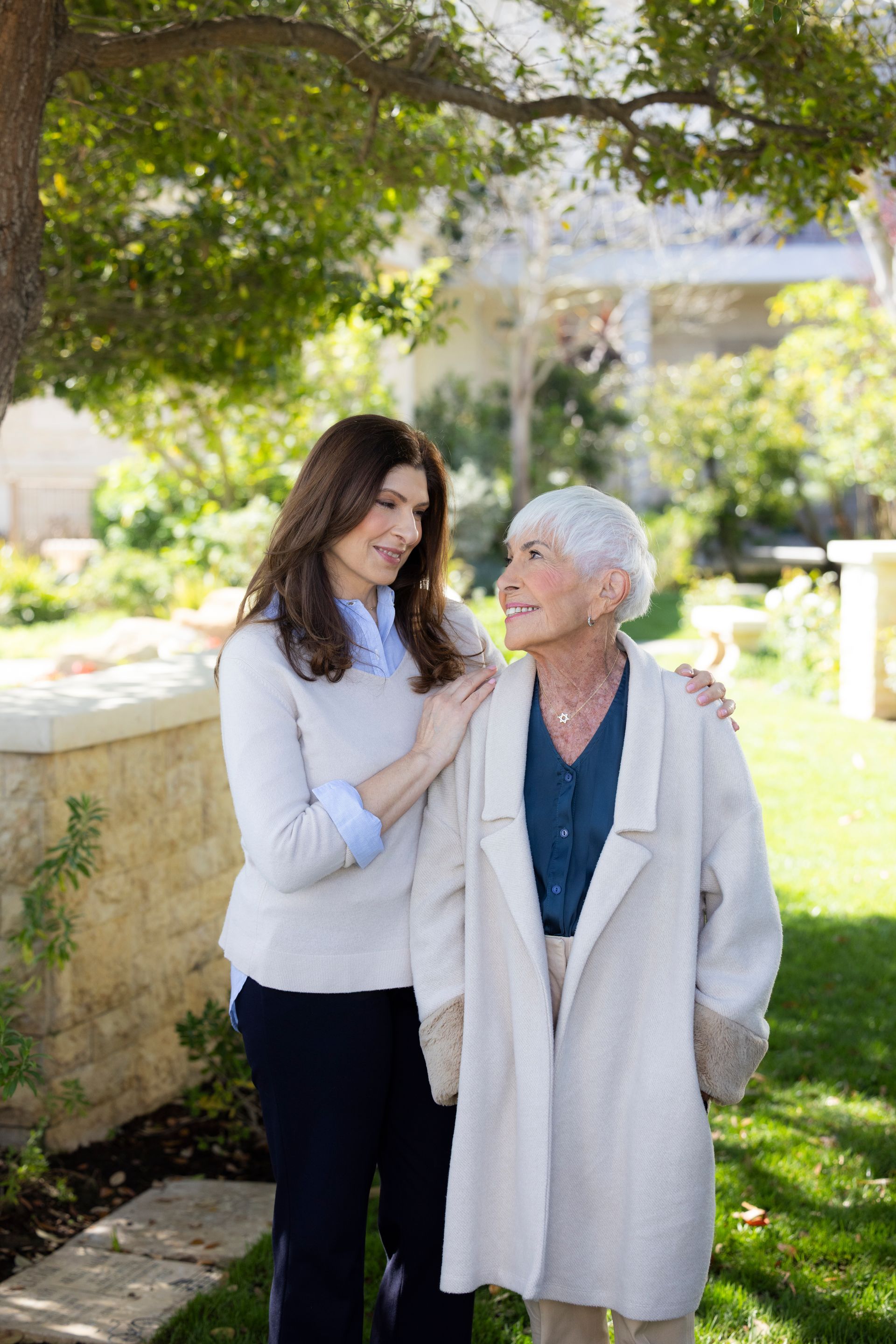
As Mother's Day approaches, we find ourselves reflecting on how our mothers have truly shaped who we have become. A phrase, repeated until it took root; the way she carried a hard day; a belief in us that she held steady long before we could hold it ourselves.


These are the gifts that do not fade. They live in how we raise our own children, how we speak to a stranger, how we weather disappointment. They are the inheritance that no appraiser can value.


Some of us are reflecting on mothers we have lost, holding their memory like a lamp in the dark. Others are still in the room with theirs, learning in real time, still receiving what she has to give. Both experiences ask the same question of us: have we stopped long enough to recognize what is being passed down?


In the pages that follow, three members of the Hillside staff share, in the spirit of a love letter, the most important thing their mothers passed down. Not a possession. A value. A phrase. A way of seeing the world.


Whether your mother is still creating her legacy in your life or you are struggling with the loss of your mother, we invite you to our Mothers’ Day Remembrance service on May 10th at Hillside Memorial Park. You can register for the event on our site.


Rafael Ochoa, General Manager of Hillside Memorial Park and Mortuary

Dear Mom,


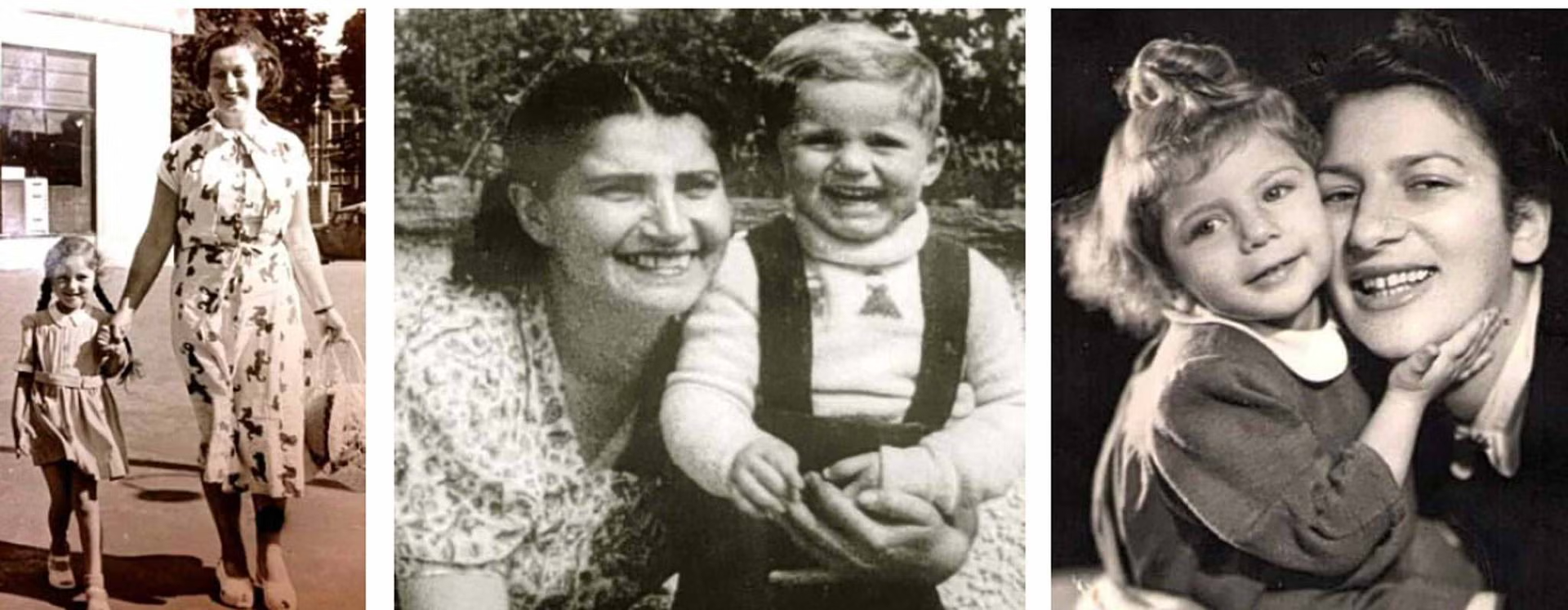
When I think of you, strangely, wonderfully, I smell Pond’s cold cream. For as long as I can remember, that has been the scent of your blessing, your hands cupping my face, your warmth passing into me the way only a mother's warmth can. When you surprise us with your cooking, the whole house changes. That is still you. That has always been you.


When I think of you, I see a strong-willed, determined, and incredibly detail-oriented person. And yes, Mom, people use those words for me, too. I take that as the highest compliment I could ever receive.


You came to Los Angeles with a third-grade education and your first three children in tow. You had two things in mind when you arrived: education for your kids, and a home of your own. You achieved both and more. From nearly nothing, you build a real estate portfolio across Los Angeles that you still manage entirely yourself, by hand, even now. I think of what it cost you to get there. I think of the doors that were physically closed in  your face when you asked for help, and how you turned that pain into a promise: one day we will have our own home, and no one will be able to close their door on us.


You kept that promise. You keep every promise you make.


You had a gift I have been trying to learn my whole life. You could walk into any room and find the one person carrying a heavy heart. Gracefully and quietly, you would find your way to them, start a gentle conversation, and somehow create the safety for them to open up. I watched you do it up close at family gatherings, and from a thousand miles away for relatives in far flung places.


And you did the same for me. If something was weighing on me, you would say, “something is there. What is going on?” Somehow, you always knew, and even though you didn’t need to ask, I treasured every time you did.


There is a phrase of yours I have carried with me, and I think I will carry it for the rest of my life: “hang on to that which no one can take away from you.”

Over time, I have learned what those things are: dignity, self-respect, education, and pride in one’s self. When everything else feels dark and heavy, I let those be my light and hope. You taught me that lesson because you lived it. When the world gave you very little to stand on, you stood on your own character, and built from there.

Working at Hillside has made me understand something more deeply than I could have otherwise. I see families at their most vulnerable. I watch children stand at a podium and try to find the words to encapsulate  someone they love. And it reminds me, every time, not to wait for the podium. The work of recognizing someone's legacy belongs in the living room before we deliver any eulogy: in the quiet morning before the day starts, in the stillness of the garden, in those calm conversations where I sit across from you and take in everything you are. I have been practicing that. Meditation, early mornings, gardening, being present with the people I love. You taught me that peace is not an accident. It is something you choose to create around yourself so that you can truly see and hear the people who matter.


You have had a far greater impact on me than you will ever fully understand. But I am going to keep telling you. That is something else this work has taught me. Do not save the gratitude. Do not let it wait for a moment that may never come. Say it now, while you are here, while we are in the same room, while I can still reach across and feel the presence of the person who made me.


I love you, Mom. I’m, so grateful for all the time we have together. I am still learning from you. I hope I always will.


With all my love,

Rafael


Rob Finger, Family Service Advisor,  Hillside Memorial Park

Dear Mom,


My favorite thing about you was your certainty in me.


"My son can do anything," you would say, to anyone who would listen. I used to protest. Mom, I am really not that smart. And you would answer, calmly, without missing a beat: You are my son. You can do anything, as long as you put your mind to it.


I think of that voice often. I thought of it most the day I told you I was being considered for a position at Hillside. I had shared the news with the three most important people in my life, my wife, my sister, and you. Two of them were startled. One of them was curious. You said, That sounds very interesting. I think that is going to be a very, very interesting job, and place to work.


You saw something the rest of the world did not always see right away. You knew it takes a particular kind of person to sit beside families on the hardest day of their lives, to meet them with patience when they are not at their best, to carry dignity into a room where dignity feels impossible. Almost seventeen years later, I am still doing that work. You are part of the reason I can.


You gave me other lessons, too. You taught me about money long before I understood why it mattered. Not as something to show off, you said, only something to respect, because in a world like ours, it is a tool that helps a person stand on their own two feet. Because of you, I was eventually able to buy the home I live in. You were still guiding me long after the lesson ended.


You taught me about family by loving ours so completely. Nothing made you shine the way our family did. When my sister, my wife, my brother-in-law, my niece, my nephew, and I were all under one roof, you were full of brightness and light. There was nothing more important to you. Nothing. You would quietly set aside something you wanted, a watch, a pair of shoes, a small indulgence, because you would rather save it for your children. Family, for you, was never a sentiment. It was a practice.


You taught me how to hold a hard day. When work was heavy, I would come home and tell you about it, and you would listen, and then you would say, very simply, that tough days pass. That the people who love me are still there. That tomorrow will look different. I still hear you saying it. I still find, always, that you were right.


And you taught me how to be good-natured. You had such humor in you. I could tease you, call you by your first name in a gentle way, and you would roll with it, eyes smiling. You made it easy to love you.


You now rest at Hillside, just a short walk from my office. I stop by to tell you about my week. My colleagues have come to know you, too. On your birthday, several of them walked over with me and sang to you. I could almost not hold back the tears. It reminded me, once again, what an extraordinary group of people surround me here, and what an extraordinary mother surrounded me first.


You have been gone since 2018. Somehow you are still with me every day. Still encouraging, steady, and reminding me that, with enough heart and enough effort, your son can do anything.

May your memory be a blessing. It already is.


With love,

Rob


Rena Pilar-Villaluz, Senior Accountant at Hillside Memorial Park

Dear Mom,


If I had to choose one word for you, just one, it would be strong. Not strong in the way the word gets thrown around carelessly, but strong in the way that matters: brave, tenacious, steady under pressure, and utterly, completely present for us.


You had to be all of that, because for so much of our childhood, Dad was working abroad. You were our cook and our driver, our teacher and our preacher, our cheerleader and our hero. You raised two daughters and a cherished son. You flew us to Indonesia during troubled times in the Philippines so our family could be together safely, then settled us back home four years later. Somehow, through all of it, you never let us feel that anything was missing. That is not a small thing, Mom. That is a remarkable thing.


Your love language was service. Fifty years as a homemaker, and you gave every one of those years with your whole heart. Our aunts, uncles, and cousins would come to our house for the holidays because they knew you would spoil them with your cooking and your warmth. Nobody left your home without feeling welcome. 


You loved to travel, too. You flew all across the Philippines, through Southeast Asia, and to visit us in North America. Despite your health struggles, some of our funniest memories together were born in hospital rooms along the way.


Your faith held you together, and it held us together, too. You prayed to those who would give you hope and strength to be who you needed to be. You believed in miracles, and we knew you were one. You gave each of us what we needed: your tough love, your high expectations, and your belief that we were capable of more.


What I hope to carry forward is exactly what you carried so quietly all those years: the willingness to serve the people you love with joy. The strength to hold steady when life asks too much. The faith that something greater is holding you, even on the hardest days. And the humor, always the humor, because you knew that laughter was its own kind of grace.


Your mission here may have ended, Mom. But the love you planted in us is still growing.


With love always,

Rena
April 30, 2026
Celebrating Their Love Mother's Day Remembrance Service
April 30, 2026
Legacies That Last What Does It Mean to Leave Something Behind?
April 20, 2026
Born Into the Light: The Miracle Babies of Mauthausen In Commemoration of Yom HaShoah
February 27, 2026
Holding Grief and Joy for Purim A Conversation with Rabbi Zachary Shapiro of Temple Akiba
February 27, 2026
Many Faiths, One Community Rabbi Calvin Dox-DaCosta on How Interfaith Values Strengthen Jewish Community
January 23, 2026
Tu B’Shevat and the Jewish Understanding of Renewal
January 23, 2026
Returning What Was Lost: A Hillside Story of Hashavat Aveidah
January 23, 2026
Remembering as a Sacred Act: The Meaning of Yahrzeit in Jewish Life
By Macy Graybeal December 26, 2025
Order as an Act of Care: How Organizing Helps Support Your Loved Ones There are moments in life when clutter becomes more than clutter. It becomes a barrier to clarity, calm, and even healing. For professional organizer Shuly Hirsch, founder of Order and Flow , organization is not simply a service. It is a pathway toward emotional relief. As she shared in our recent conversation, Shuly’s work began by chance but quickly grew into a calling. More than a decade later, she is still inspired by the work because “every project is a new challenge that I love to solve.” Her insights remind us that organizing our lives is not only about tidiness. It is about caring for ourselves and the people we love, especially as we think about the future. When Life Changes, Organization Becomes a Lifeline Most people seek help from a professional organizer when they are facing major transitions. Marriage, divorce, a new baby, downsizing, or the loss of a loved one can disrupt both our emotional and physical lives. Shuly sees this often in her clients. “My clients are overwhelmed people. They do not know where to start, and the mess is too much for them to handle.” The clutter, she explains, is rarely only physical. It is tied to memories, hopes, and unresolved feelings. Through patient guidance, Shuly helps people understand their relationship with their belongings. “Stuff is stuff, but it is not always just stuff. It can have memories, it can be aspirational, it can be regret.” When clients learn this, they begin to make choices based on clarity rather than confusion. The result is relief. People breathe easier. Their home feels lighter. Their life feels more manageable. Estate Organizing Is a Form of Emotional Support For families who have lost a loved one, organization becomes something deeper. Estate clearing, Shuly explains, “is not really organizing. It is giving support to the family.” Grief already asks so much of people. Suddenly sorting through a lifetime of belongings, paperwork, and history can feel overwhelming. Shuly approaches this work with gentleness and structure. She helps families decide what to keep, what to donate, what to share, and what must be handled responsibly, moving at the pace they are ready for. “When somebody passes, the families are left with more than grief,” she said. “They are left with a lot of stuff, and between the emotional turmoil and the pressure of taking care of the estate, it is too much.” Sometimes this work involves uncovering memories that families fear may be lost. She recalled one assignment where “they asked me to find a book written in Yiddish, and it was buried in a place full of things. But I found the book.” She even located a translator so the family could read it. For Shuly, estate organizing is both practical and deeply human. It is a service, but it is also a form of emotional service. The Most Loving Gift You Can Leave Is Order, Not Chaos One of the clearest truths Shuly offered is that planning ahead is an act of love. “The worst thing you can leave behind is a big mess,” she said. This extends beyond physical belongings. It includes wills that are incomplete, accounts no one knows about, instructions that were never written down, and objects that family members feel obligated to keep out of guilt or confusion. Shuly encourages people to take steps now to spare loved ones later. Her advice includes: Downsize before someone else has to do it for you Ask family members what they want rather than assuming Keep important documents easy to find Provide clear burial and end-of-life instructions Work with qualified legal and financial professionals Decide what story you want your belongings to tell Preparing these elements is not morbid. It is responsible and caring. As Shuly said, “We are all going to pass away. People should be open to the concept and decide how they want to leave things for their family.” It is not easy to talk about, but it prevents years of stress and allows families to remember their loved ones without resentment. “It is better to be remembered with love,” she said, “and not with the feeling that it took years to settle the estate because nothing was in order.” Bringing Order to Life So Loved Ones Can Remember With Peace Organizing your life is not about perfection. It is about intention and compassion for those who will walk behind you. It allows your home to be a place of comfort, not chaos. It ensures that your loved ones are not left with burdens they did not choose. It also preserves the story you want your life to tell. As Shuly’s work makes clear, bringing order to your life today offers relief in the present and kindness for the future. Whether you are preparing for a new chapter or thinking about the legacy you hope to leave, organizing your world is one of the most meaningful acts of love you can offer. If you want to begin planning for your future, the best place to start is Hillside’s Advance Care Directive. When you feel ready to begin the conversation, reach out on our site or call us at 800.576.1994 to speak to a caring and compassionate family advisor.
By Macy Graybeal December 26, 2025
Bar Mitzvah: Second Time Around Hillside Memorial Park and Mortuary recently invited Dr. Ronald Andiman to share his reflections on celebrating his second Bar Mitzvah at age 83, a milestone rooted in the tradition that a full life spans seventy years. His story moved us with its honesty, gratitude, and sense of rediscovery. Dr. Andiman revisited this rite of passage with intention and maturity, finding new meaning in an experience first shaped in childhood. We are honored to share his words and hope his journey inspires reflection on the many ways life invites us to grow at every stage. We hope you enjoy it as much as we did. Bar Mitzvah: Second Time Around Recently I celebrated my Bar Mitzvah. For the second time. There is a Jewish tradition that measures a full life as 70 years in duration. Therefore, at the age of 83, I was justified in having a repeat Bar Mitzvah. This time, I wanted to make it mine. A Bar Mitvah is a rite of passage. It marks the transition between childhood and adulthood, and while, in the modern world, a 13-year old can hardly be considered an adult, the ceremony at least marks the passageway toward adulthood. Traditionally, it marks the transition from the time when the consequences of one’s behavior are borne by the parent to the time when the consequences of one’s actions are borne by the maturing 13 year old. If that is the premise for the Bar Mitzvah then the preparation for it should reflect the intellectual and psychological issues involved in passing from one life station and another. But my original Bar Mitzvah neither provided me with the opportunity to reflect on the meanings and responsibilities implicit in maturity nor did it provide an opportunity for me to explore the richness of Jewish thought contained in my Bar Mitzvah Torah and haftarah readings. I also felt that very little of my original Bar Mitzvah was my own. I was an actor in a Bar Mitzvah script that was written by others. My first Bar Mitzvah took place at the large Orthodox Synagogue in Brooklyn where I attended Hebrew School and was a member of the junior congregation. At an appointed time, I was instructed to show up at the back of the basement synagogue where I met Mr. Berkowitz, who was soft spoken and patient, and task-driven. He was white haired and bearded with a Yiddish accent. He sat across from me at the long, white sheet-covered table in the back, where old men studied Talmud. From the back of Chumash (the Five books of Moses) , where the cantillated musical forms were written, Mr. Berkowitz chanted, “Munach, munach, r’vi’i” and motioned to me to repeat after him. This was akin to chanting an ancient, esoteric Jewish version of “do-re-me.” My rendition was probably awful. I was notorious for singing off-key. He chanted again and I tried to emulate him more closely. After a few backs-and-forths, he shrugged, raised his eyebrows questioningly, and continued patiently, chanting “Mahpach, pashtah, zakeph, kattan” and motioned me to repeat the melody after him. And so it went. After I barely passed muster on the cantillation I applied the cantillation diacritical marks to the words of the haftarah. Once a week for perhaps six months we went on like this line by line until I could read the words accurately and chant them in my version of the traditional tune guided by the diacritical marks in the text. Next, I learned how to use a somewhat different cantillation for the maftir (last section of the weekly Torah portion) text which I learned to read in the calligraphic form I would encounter when I chanted this directly from the Torah. The task was entirely performative. As a somewhat curious kid I looked at the English translation of the haftarah text which came from the latter chapters of the Book of Isaiah. I could make no sense of it. Mr. Berkowitz did not consider it his job nor, I guess did I, to explain what I was reading. The only Bar Mitzvah task was to read the text flawlessly. I passed with high marks. I had learned the chant and read the assigned text before the congregation. I was a Bar Mitzvah. I breathed a sigh of relief and did not reflect much about this experience, which was identical to that of my friends. It was only in recent years, when I learned of the depth of contemporary Bar Mitzvah preparation for kids and the program of study for those adults doing their Bar Mitzvah for the first time that I saw the possibility of making the Bar Mitzvah experience more meaningful for me by doing it a second time. I approached Rabbi Michelle Missaghieh about my interest in doing a more authentic Bar Mitzvah at this time in my life and she expressed enthusiastic support. There was a wrinkle, however. A Bat Mitzvah – a first Bat Mitzvah-- had already been scheduled for the date of my own Bar Mitzvah anniversary. Rabbi Missaghieh spoke to the family on my behalf and they graciously consented to share the date with me. I was apprehensive that my sharing the bimah (platform) would shift the focus of the congregation from the young woman’s first and perhaps only Bat Mitzvah. I did not want to dull or distract from the significance of the Bat Mitzvah experience for her and for her family and loved ones. I fully embraced these restrictions and later met with the Bat Mitzvah girl and her mother in order to create some ease with each other and to confirm my intention to restrict my participation and in no way to divert attention from her major life-cycle event. The young woman was effervescent and embraced the plan with a full heart. Her mother was warm and welcoming. I felt relieved and reassured. With the guidance of the rabbis, the bat mitzvah girl helped lead the service as is the custom at TIOH. The Torah was passed from her grandparents to her parents to her. She carried it through the congregation, chanted her Torah portion and gave her drash (Torah discussion). Then I was invited to join her and together we recited blessings for the haftarah. I chanted 8 verses of it and gave my own short teaching about what the haftarah meant to me. My much longer reflection on it and the meaning of this celebration was included in a pamphlet with two pictures on the front—one as a bar mitzvah boy and the other as the 83 year old I am now. Rabbi Missaghieh organized a program of self- and interactive study. I labored over the text, researched the context in which it was written, tried to understand the meaning of what Isaiah was communicating to his audience in ancient times and what their experience might have been. I looked at the poetic style and looked at a few different translations to get a sense of what range of meanings one might apply to the text. Over a period of several weeks in a kind of chevruta (traditional paired learning), Rabbi Missaghieh and I shared our thoughts and provoked new ones. I then wrote an essay that organized my reflections. This was published in a booklet that was distributed to the congregation at the actual Bar Mitzvah ceremony. Since I was asked to read just a few lines from the haftarah, I selected those that were most meaningful to me. I prepared the chanting with the help of an online source, an easily accessible Mr. Berkowitz whenever I needed him. That process was made relatively pain-free by virtue of the fact that I had an original model for how it was done, even though it was a lifetime ago. The process turned out to be more than a do-over, an attempt to “do it right,” or to “do it my way.” I was bringing my adult self back to an experience of transition but this time it was not from childhood to adulthood but from adulthood to another stage of adulthood. I felt a sense of gratitude that I was lucky enough to have lived long enough to perform this act, that I was physically and cognitively able to carry it off, that I had a wonderful community of friends and family to bear witness to this new rite of passage. It was an acknowledgment that each day we open our eyes to a renewed universe, in a body reborn to meet the day with a refreshed sense of possibility. On one level I was carrying out my mission to self-correct the limitations of my original Bar Mitzvah, but on another level I was completing my original Bar Mitzvah. I couldn’t have done this one without having done the original at age 13. That event in 1955 contained the seeds of this one. It was the source of the skills and was the kernel of yearning to learn more, to understand more, to engage more. The 70-year process of fruition was capped with a spiritual experience. When the Rabbi pronounced the priestly blessing with her fingers spread over me in the ancient pattern, with the tallit extended over my head, I felt something come over me. Somehow I experienced myself in the full landscape of my journey and I felt…new.
Show More