When we think of legacy, our minds often drift toward the tangible. A document signed and filed away, a name engraved in stone, a portrait passed down through generations. These things matter, and they endure. But in Jewish tradition, legacy has always meant something deeper. The Torah does not simply ask us to remember those who came before. It commands it.
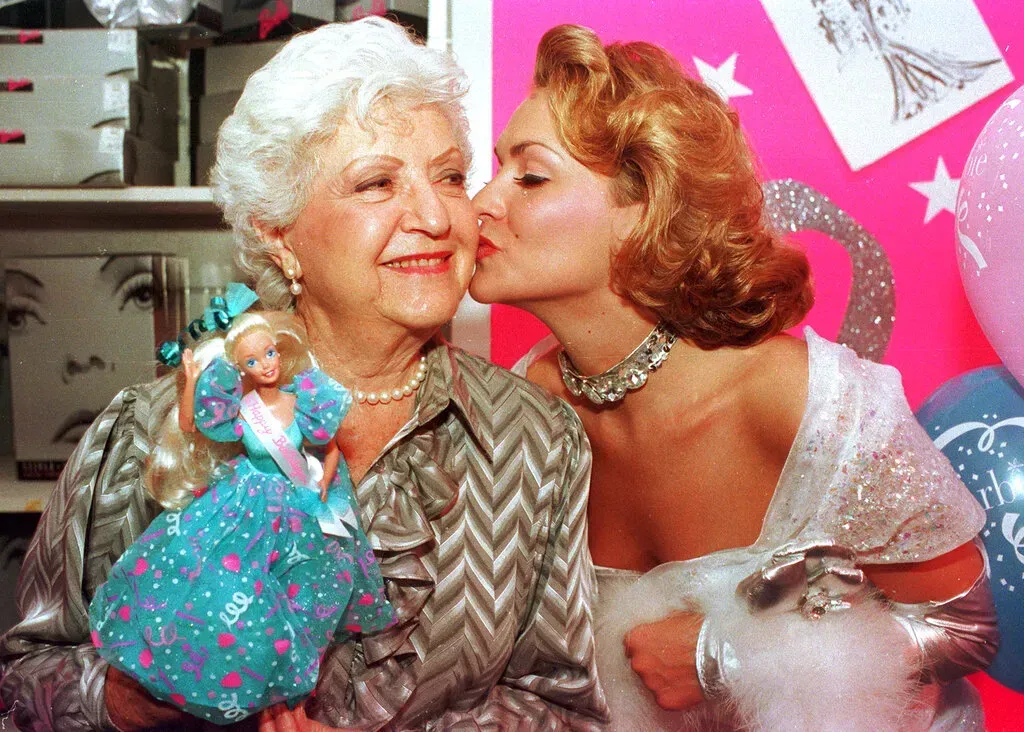
Zachor, the Hebrew word for remember, is one of the sacred obligations of Jewish life, and it teaches us that remembrance is not a passive feeling but a moral act. To remember well is to carry something forward. This month, we are honored to reflect on the life of Ruth Handler, one of Hillside’s Distinguished Residents, whose story illuminates what it truly means to leave something behind. Born Ruth Mosko to Polish Jewish immigrants, Ruth would become the co-founder of Mattel and the creator of Barbie. But her most moving contributions flowed from the same quiet instinct that animated everything she did: the ability to see a need, and the courage to meet it.
Legacy Begins With Paying Attention
Ruth Handler did not set out to build an empire. She set out to answer a question she kept noticing in her own home. Watching her young daughter, Barbara, play with paper dolls, Ruth saw something no one else had thought to take seriously. The dolls on the market were almost all babies, designed to teach little girls how to become mothers. But Barbara did not want to play at being a mother. She wanted to imagine herself as a grown woman with a life of her own. Ruth paid attention to that small, ordinary observation, and from it she built something that would reshape the imaginations of generations.
This is often how legacy begins. Not with grand ambition, but with the humble act of noticing. The Jewish obligation of
zachor begins in precisely this way, with attention. To remember, in the fullest sense, we must first learn to see. A loved one who always remembered birthdays. A parent who knew, without asking, when their child needed quiet company. A friend who listened more than they spoke. These are the seeds from which enduring legacies grow. The people who leave the most behind are often the ones who were most present while they were here, attentive to the needs no one else was thinking to name.
The Courage to Meet a Need
Noticing is only the beginning. Ruth Handler’s gift was not only in seeing what others missed, but in the quiet courage to act on what she saw. When she brought the idea of Barbie to the toy industry in the late 1950s, she was told repeatedly that it would not work. Mothers would not buy it. The idea was too unconventional. Ruth believed otherwise, and she persisted. When Barbie debuted at the New York Toy Fair in 1959, she offered something that had not existed before: a doll that invited a girl to picture her own future, in all its possibility.
Decades later, Ruth would answer a second, more personal need. After her own mastectomy in the 1970s, she searched for a prosthesis that felt natural, that restored comfort and confidence to women who had survived breast cancer. Finding nothing that met the moment, she created it herself. She called the company Nearly Me, and she traveled store to store fitting women personally, bringing dignity and quiet reassurance to a community that had long been overlooked. Here was
tikkun olam lived at human scale, the sacred Jewish charge to repair the world made tangible in a dressing room, in a conversation, in a woman’s restored sense of herself. See the need. Believe it matters. Do the work. It is a pattern any of us can follow, in ways large and small, in the lives we are given to live.
May Their Memory Be a Blessing
In Jewish tradition, when we speak of someone who has died, we often follow their name with the phrase
zichrona livracha or
zichrono livracha, may her memory be a blessing, may his memory be a blessing. It is a phrase so woven into Jewish life that we can say it without pausing to consider what it asks of us. But the words contain a quiet theology. They suggest that memory itself can be a blessing, and that the act of remembering the dead is one of the ways blessing enters the world. To remember well is to do sacred work.
Ruth Handler left a toy company and an icon, yes. But she also left countless women who felt seen after surgery, and countless girls who grew up believing their imaginations belonged to them. Those gifts cannot be inventoried or bequeathed. They live on in the people who received them, and in the people those people went on to become. This is what Jewish tradition calls
l’dor v’dor, from generation to generation. The legacy that matters most is not the estate we pass down, but the goodness that continues to ripple outward through the lives we have touched.
The same is true of the loved ones we mourn at Hillside every day. When we sit quietly with the memory of a mother, a father, a spouse, a friend, what rises most often is not their accomplishments, but their attentions. The way they made us feel known. The small kindnesses they offered without ceremony. The causes they quietly championed. The traditions they kept alive at the Shabbat table or the holiday gathering. These are the legacies that last. They are carried not in documents, but in the way we move through the world because of having been loved by them.
Carrying the Legacy Forward
To grieve someone is, in part, to take inventory of what they gave. And in that act of remembering, we often discover that their legacy has already begun to take root in us. We notice what they would have noticed. We act on what they would have acted on. We carry forward, in our own quiet ways, the needs they thought to fill. This is
zachor at its deepest. Not remembrance as mourning alone, but remembrance as continuation, as the living answer we offer to a life that mattered. The stories of every soul we are honored to remember at Hillside, teach us that legacy is less about what we leave than about how we lived. It is built not in monuments but in moments: the attention we pay, the needs we meet, the love we offer without waiting to be asked.
If you are walking the long road of grief and finding yourself reflecting on the legacy of someone you have lost, please know that you do not have to walk it alone. At Hillside, we are privileged to offer monthly Grief Support Groups, a gentle and welcoming space where those who are mourning can find companionship, understanding, and the quiet reassurance of others who know the terrain. Whether your loss is recent or many years behind you, you are warmly invited to join us. To learn more or to reserve your place in an upcoming group, please visit our
website or reach out to our care team. We would be honored to walk beside you, in the sacred work of remembering.