A Legacy of Love: Why Planning Ahead Matters

Macy Graybeal • December 26, 2025

A Legacy of Love: Why Planning Ahead Matters

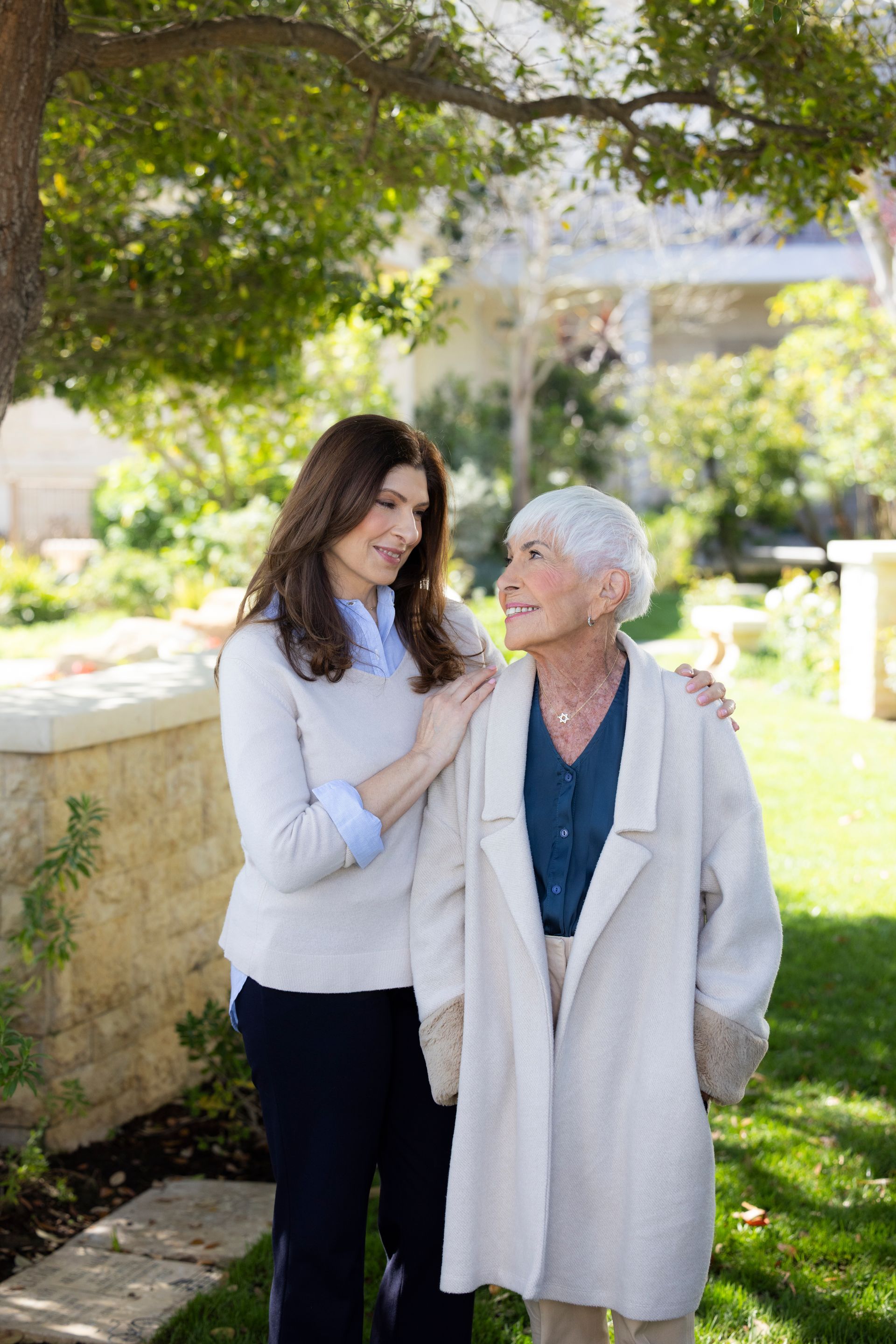
Preparing for the future is never easy, yet it is one of the most meaningful acts of care we can offer the people we love. Thinking ahead allows us to shape how we wish to be remembered while protecting our families from the emotional and logistical stress that can accompany loss. “Throughout our lives, we work to protect those we love from the hardships of the world,” Explains Hillside General Manager Raphael Ochoa. “Pre-planning our arrangements is one final act of that same love—shielding them from confusion and stress, so their time can be spent healing, not deciding.” By planning in advance, act with compassion in a way that honors your life, your values, and those closest to you.

Creating Space for Meaningful Choices

When you plan in advance, you give yourself the time and clarity to make thoughtful decisions. Instead of rushing through arrangements during a moment of grief, you are able to explore each option with intention: the type of service you prefer, where you would like your final resting place to be, the music or readings that reflect your life, or the traditions that matter most to you. During a personal consultation, our experienced Family Service Advisors walk through every detail with sensitivity and care, ensuring your choices align with what feels true to you. This process gives your family reassurance, knowing your wishes were made with calm and purpose.

Lifting a Burden from Loved Ones

One of the greatest gifts of advance planning is the peace of mind it brings to your family. Losing a loved one is emotionally overwhelming; having to make significant decisions at the same time can compound the weight of grief. By documenting your plans ahead of time, you spare your family from guessing what you would have wanted or navigating difficult conversations under stress. Hillside guides you in recording each detail so your preferences are clearly communicated and legally protected. You also have the opportunity to choose funding options that fit your needs, reducing financial strain and helping ensure everything is arranged responsibly and thoughtfully.

Honoring Your Legacy with Personalization

Your life story is unique, and your final farewell should reflect that. Planning ahead lets you create a deeply personal tribute shaped by your values, personality, and traditions. Our team helps you customize every element so your arrangements feel meaningful, authentic, and rooted in the life you lived. Whether you prefer a traditional ceremony, a gathering that highlights cultural or religious practices, or a more contemporary celebration of life, your plans become a lasting portrait of who you are and what matters most to you.

A Thoughtful Step Toward Peace of Mind

Taking the time to plan is an act of love that ripples forward. It eases uncertainty, preserves clarity, and offers comfort and direction during one of life’s most challenging moments. At Hillside Memorial Park and Mortuary, we are honored to be your partner in this process, offering compassionate guidance and comprehensive support at every step. 

Our team is here to walk with you and help you build a plan that brings peace to your heart and to the people you cherish. When you feel ready to begin the conversation, reach out on our site or call us at 800.576.1994.
 

By Macy Graybeal December 26, 2025
Order as an Act of Care: How Organizing Helps Support Your Loved Ones There are moments in life when clutter becomes more than clutter. It becomes a barrier to clarity, calm, and even healing. For professional organizer Shuly Hirsch, founder of Order and Flow , organization is not simply a service. It is a pathway toward emotional relief. As she shared in our recent conversation, Shuly’s work began by chance but quickly grew into a calling. More than a decade later, she is still inspired by the work because “every project is a new challenge that I love to solve.” Her insights remind us that organizing our lives is not only about tidiness. It is about caring for ourselves and the people we love, especially as we think about the future. When Life Changes, Organization Becomes a Lifeline Most people seek help from a professional organizer when they are facing major transitions. Marriage, divorce, a new baby, downsizing, or the loss of a loved one can disrupt both our emotional and physical lives. Shuly sees this often in her clients. “My clients are overwhelmed people. They do not know where to start, and the mess is too much for them to handle.” The clutter, she explains, is rarely only physical. It is tied to memories, hopes, and unresolved feelings. Through patient guidance, Shuly helps people understand their relationship with their belongings. “Stuff is stuff, but it is not always just stuff. It can have memories, it can be aspirational, it can be regret.” When clients learn this, they begin to make choices based on clarity rather than confusion. The result is relief. People breathe easier. Their home feels lighter. Their life feels more manageable. Estate Organizing Is a Form of Emotional Support For families who have lost a loved one, organization becomes something deeper. Estate clearing, Shuly explains, “is not really organizing. It is giving support to the family.” Grief already asks so much of people. Suddenly sorting through a lifetime of belongings, paperwork, and history can feel overwhelming. Shuly approaches this work with gentleness and structure. She helps families decide what to keep, what to donate, what to share, and what must be handled responsibly, moving at the pace they are ready for. “When somebody passes, the families are left with more than grief,” she said. “They are left with a lot of stuff, and between the emotional turmoil and the pressure of taking care of the estate, it is too much.” Sometimes this work involves uncovering memories that families fear may be lost. She recalled one assignment where “they asked me to find a book written in Yiddish, and it was buried in a place full of things. But I found the book.” She even located a translator so the family could read it. For Shuly, estate organizing is both practical and deeply human. It is a service, but it is also a form of emotional service. The Most Loving Gift You Can Leave Is Order, Not Chaos One of the clearest truths Shuly offered is that planning ahead is an act of love. “The worst thing you can leave behind is a big mess,” she said. This extends beyond physical belongings. It includes wills that are incomplete, accounts no one knows about, instructions that were never written down, and objects that family members feel obligated to keep out of guilt or confusion. Shuly encourages people to take steps now to spare loved ones later. Her advice includes: Downsize before someone else has to do it for you Ask family members what they want rather than assuming Keep important documents easy to find Provide clear burial and end-of-life instructions Work with qualified legal and financial professionals Decide what story you want your belongings to tell Preparing these elements is not morbid. It is responsible and caring. As Shuly said, “We are all going to pass away. People should be open to the concept and decide how they want to leave things for their family.” It is not easy to talk about, but it prevents years of stress and allows families to remember their loved ones without resentment. “It is better to be remembered with love,” she said, “and not with the feeling that it took years to settle the estate because nothing was in order.” Bringing Order to Life So Loved Ones Can Remember With Peace Organizing your life is not about perfection. It is about intention and compassion for those who will walk behind you. It allows your home to be a place of comfort, not chaos. It ensures that your loved ones are not left with burdens they did not choose. It also preserves the story you want your life to tell. As Shuly’s work makes clear, bringing order to your life today offers relief in the present and kindness for the future. Whether you are preparing for a new chapter or thinking about the legacy you hope to leave, organizing your world is one of the most meaningful acts of love you can offer. If you want to begin planning for your future, the best place to start is Hillside’s Advance Care Directive. When you feel ready to begin the conversation, reach out on our site or call us at 800.576.1994 to speak to a caring and compassionate family advisor.
By Macy Graybeal December 26, 2025
Bar Mitzvah: Second Time Around Hillside Memorial Park and Mortuary recently invited Dr. Ronald Andiman to share his reflections on celebrating his second Bar Mitzvah at age 83, a milestone rooted in the tradition that a full life spans seventy years. His story moved us with its honesty, gratitude, and sense of rediscovery. Dr. Andiman revisited this rite of passage with intention and maturity, finding new meaning in an experience first shaped in childhood. We are honored to share his words and hope his journey inspires reflection on the many ways life invites us to grow at every stage. We hope you enjoy it as much as we did. Bar Mitzvah: Second Time Around Recently I celebrated my Bar Mitzvah. For the second time. There is a Jewish tradition that measures a full life as 70 years in duration. Therefore, at the age of 83, I was justified in having a repeat Bar Mitzvah. This time, I wanted to make it mine. A Bar Mitvah is a rite of passage. It marks the transition between childhood and adulthood, and while, in the modern world, a 13-year old can hardly be considered an adult, the ceremony at least marks the passageway toward adulthood. Traditionally, it marks the transition from the time when the consequences of one’s behavior are borne by the parent to the time when the consequences of one’s actions are borne by the maturing 13 year old. If that is the premise for the Bar Mitzvah then the preparation for it should reflect the intellectual and psychological issues involved in passing from one life station and another. But my original Bar Mitzvah neither provided me with the opportunity to reflect on the meanings and responsibilities implicit in maturity nor did it provide an opportunity for me to explore the richness of Jewish thought contained in my Bar Mitzvah Torah and haftarah readings. I also felt that very little of my original Bar Mitzvah was my own. I was an actor in a Bar Mitzvah script that was written by others. My first Bar Mitzvah took place at the large Orthodox Synagogue in Brooklyn where I attended Hebrew School and was a member of the junior congregation. At an appointed time, I was instructed to show up at the back of the basement synagogue where I met Mr. Berkowitz, who was soft spoken and patient, and task-driven. He was white haired and bearded with a Yiddish accent. He sat across from me at the long, white sheet-covered table in the back, where old men studied Talmud. From the back of Chumash (the Five books of Moses) , where the cantillated musical forms were written, Mr. Berkowitz chanted, “Munach, munach, r’vi’i” and motioned to me to repeat after him. This was akin to chanting an ancient, esoteric Jewish version of “do-re-me.” My rendition was probably awful. I was notorious for singing off-key. He chanted again and I tried to emulate him more closely. After a few backs-and-forths, he shrugged, raised his eyebrows questioningly, and continued patiently, chanting “Mahpach, pashtah, zakeph, kattan” and motioned me to repeat the melody after him. And so it went. After I barely passed muster on the cantillation I applied the cantillation diacritical marks to the words of the haftarah. Once a week for perhaps six months we went on like this line by line until I could read the words accurately and chant them in my version of the traditional tune guided by the diacritical marks in the text. Next, I learned how to use a somewhat different cantillation for the maftir (last section of the weekly Torah portion) text which I learned to read in the calligraphic form I would encounter when I chanted this directly from the Torah. The task was entirely performative. As a somewhat curious kid I looked at the English translation of the haftarah text which came from the latter chapters of the Book of Isaiah. I could make no sense of it. Mr. Berkowitz did not consider it his job nor, I guess did I, to explain what I was reading. The only Bar Mitzvah task was to read the text flawlessly. I passed with high marks. I had learned the chant and read the assigned text before the congregation. I was a Bar Mitzvah. I breathed a sigh of relief and did not reflect much about this experience, which was identical to that of my friends. It was only in recent years, when I learned of the depth of contemporary Bar Mitzvah preparation for kids and the program of study for those adults doing their Bar Mitzvah for the first time that I saw the possibility of making the Bar Mitzvah experience more meaningful for me by doing it a second time. I approached Rabbi Michelle Missaghieh about my interest in doing a more authentic Bar Mitzvah at this time in my life and she expressed enthusiastic support. There was a wrinkle, however. A Bat Mitzvah – a first Bat Mitzvah-- had already been scheduled for the date of my own Bar Mitzvah anniversary. Rabbi Missaghieh spoke to the family on my behalf and they graciously consented to share the date with me. I was apprehensive that my sharing the bimah (platform) would shift the focus of the congregation from the young woman’s first and perhaps only Bat Mitzvah. I did not want to dull or distract from the significance of the Bat Mitzvah experience for her and for her family and loved ones. I fully embraced these restrictions and later met with the Bat Mitzvah girl and her mother in order to create some ease with each other and to confirm my intention to restrict my participation and in no way to divert attention from her major life-cycle event. The young woman was effervescent and embraced the plan with a full heart. Her mother was warm and welcoming. I felt relieved and reassured. With the guidance of the rabbis, the bat mitzvah girl helped lead the service as is the custom at TIOH. The Torah was passed from her grandparents to her parents to her. She carried it through the congregation, chanted her Torah portion and gave her drash (Torah discussion). Then I was invited to join her and together we recited blessings for the haftarah. I chanted 8 verses of it and gave my own short teaching about what the haftarah meant to me. My much longer reflection on it and the meaning of this celebration was included in a pamphlet with two pictures on the front—one as a bar mitzvah boy and the other as the 83 year old I am now. Rabbi Missaghieh organized a program of self- and interactive study. I labored over the text, researched the context in which it was written, tried to understand the meaning of what Isaiah was communicating to his audience in ancient times and what their experience might have been. I looked at the poetic style and looked at a few different translations to get a sense of what range of meanings one might apply to the text. Over a period of several weeks in a kind of chevruta (traditional paired learning), Rabbi Missaghieh and I shared our thoughts and provoked new ones. I then wrote an essay that organized my reflections. This was published in a booklet that was distributed to the congregation at the actual Bar Mitzvah ceremony. Since I was asked to read just a few lines from the haftarah, I selected those that were most meaningful to me. I prepared the chanting with the help of an online source, an easily accessible Mr. Berkowitz whenever I needed him. That process was made relatively pain-free by virtue of the fact that I had an original model for how it was done, even though it was a lifetime ago. The process turned out to be more than a do-over, an attempt to “do it right,” or to “do it my way.” I was bringing my adult self back to an experience of transition but this time it was not from childhood to adulthood but from adulthood to another stage of adulthood. I felt a sense of gratitude that I was lucky enough to have lived long enough to perform this act, that I was physically and cognitively able to carry it off, that I had a wonderful community of friends and family to bear witness to this new rite of passage. It was an acknowledgment that each day we open our eyes to a renewed universe, in a body reborn to meet the day with a refreshed sense of possibility. On one level I was carrying out my mission to self-correct the limitations of my original Bar Mitzvah, but on another level I was completing my original Bar Mitzvah. I couldn’t have done this one without having done the original at age 13. That event in 1955 contained the seeds of this one. It was the source of the skills and was the kernel of yearning to learn more, to understand more, to engage more. The 70-year process of fruition was capped with a spiritual experience. When the Rabbi pronounced the priestly blessing with her fingers spread over me in the ancient pattern, with the tallit extended over my head, I felt something come over me. Somehow I experienced myself in the full landscape of my journey and I felt…new.
Coming Home: What the Return of Israeli Hostages Means in Los Angeles
December 5, 2025
Coming Home: What the Return of Israeli Hostages Means in Los Angeles
Four young people holding up white t-shirts with colorful text. Outdoors, likely at an event.
December 4, 2025
Lighting the Way with Hillside Memorial Park and Big Sunday
By Lori Larcara October 29, 2025
Halloween and Jewish Values
October 7, 2025
When planning for the future, one of the most meaningful decisions we make is where we or our loved ones will be laid to rest. At Hillside Memorial Park and Mortuary, we understand that every family has unique traditions, priorities, and hopes for how they wish to be remembered. That’s why we offer a wide range of cemetery options, blending timeless Jewish practices with modern considerations such as sustainability and personalization. Ground Burial: A Timeless Choice For many families, traditional ground property offers peace of mind. With the option of single or double arrangements, these graves are set across the park’s serene landscapes. Families often find comfort in knowing their loved one rests within a tranquil environment, tended with care through Hillside’s perpetual support program. Gan Eden: Green Burial for a Sustainable Legacy More and more, families are seeking environmentally conscious options. Hillside’s Gan Eden section allows for green burial, returning to a simple, natural practice. Biodegradable shrouds or caskets minimize environmental impact while honoring Jewish tradition. For those who value sustainability, this option ensures that care for the earth continues even after life. Wall and Estate Properties: Distinguished and Personal Hillside offers architecturally beautiful wall spaces made of Jerusalem stone, granite, or travertine. Families may personalize bronze markers to reflect a loved one’s story. For those seeking a private family setting, estate properties provide a shared resting place with inscriptions that speak to legacy, togetherness, and heritage. Cremation and Urn Options: Honoring Tradition in New Ways Cremation has become a meaningful choice for many families. Hillside’s Canaan Cremation Gardens provide thoughtfully designed spaces for cremated remains, from ground urn spaces and wall niches to garden boulders and companion pedestals. Families may also choose urn property in the Garden of Solomon, with a tranquil water feature adding beauty and reflection. Unique Memorials: Family Rooms, Sarcophagi, and Custom Markers For families desiring exclusivity, private family rooms and distinguished granite sarcophagi create serene and personalized spaces. Hillside also offers custom bronze and granite memorial markers, including Lasting Memories™ designs that incorporate photographic imagery—helping families tell their story in a truly personal way. Finding What’s Right for You Choosing a final resting place is deeply personal. Some families are guided by tradition, others by a desire for environmental sustainability, and still others by the wish for privacy or personalization. Whatever your values, Hillside is here to help you explore the options, ask meaningful questions, and choose a space that feels right for your family. At Hillside Memorial Park and Mortuary, every option is cared for with dignity, beauty, and respect. Together, we can create a lasting place of memory that honors your loved one and provides comfort for generations to come. To discover what’s right for you, please call (800) 576-1994 or explore your full range of cemetery options on our site today.
October 7, 2025
The story of Abraham purchasing a burial place for his wife, Sarah, is one of the earliest examples in Jewish tradition of how love, faith, and legacy intersect. More than a historical detail, this moment remains a powerful teaching about permanence, community, and the bonds that continue long after life ends. This month, we spoke with our Community Liaison, Sarah Gronlund-Jacob, about the meaning of this story and its enduring relevance today. A Sacred Beginning When Sarah, the matriarch and mother of Isaac, passed away, Abraham sought a proper place to bury her. “Abraham and Sarah were two of the first to follow the monotheistic religion,” Sarah explains. “When Sarah dies, Abraham wants to bury her, and this is the first time we get a mention in the Torah about how important it is to have a place for burial.” Abraham insisted on purchasing the Cave of Machpelah from the Hittite people, despite their willingness to offer it as a gift. “He makes it very clear that he doesn’t want to accept it as a gift. He wants to own it.” That purchase became the foundation for a lineage of burial, where not only Sarah, but Abraham, Isaac, Rebecca, and Jacob would later rest. Permanence, Place, and Peoplehood Abraham’s decision to purchase the land underscored a deeper value: permanence. “It’s a purchase he’s making not only for his loved one, but with the intent that he’s going to be buried there as well,” Sarah notes. In doing so, Abraham tied his family’s story to a physical place, creating a tangible connection between memory and land. “When you purchase cemetery property,” Sarah adds, “it’s not for the person being buried, it’s for the people going to visit the person being buried.” In this way, the act symbolized not just ownership but also identity, anchoring a people’s history in a sacred space. From Ancient Story to Living Tradition Though the Torah story itself is rarely referenced in modern ritual, its themes echo through Jewish practice today. “It solidifies the importance of burial, and then also being able to visit the people that you have buried,” Sarah says. These traditions live on in rituals like Yizkor remembrance services during the major holidays of Passover, Sukkot, and Shavuot. Each of these moments calls the community back to their loved ones’ graves and underscores that remembrance and presence are inseparable from Jewish life. Relevance Across Generations For Sarah, the story also resonates with contemporary Jewish life, even for those who may be more secular. “Judaism has a history of displacement,” she explains. “By burying your deceased in the places where you are, you’re also building a connection to those new places.” Just as Abraham established permanence in the Land of Israel, Jewish families have created continuity wherever they have lived, whether in Europe, North Africa, or America. As Sarah reflects, “Many people don’t have a connection to Israel, so why would you be buried there when you could be buried right here? It connects future generations to the place where their lives are.” Honoring Life Through Legacy Fittingly, the Torah portion that recounts this story is called Chayei Sarah—“The Life of Sarah.” As Sarah observes, “It’s interesting that the first thing that happens in the ‘Life of Sarah’ portion is that she dies. The conclusion of life is what helps you celebrate the life that was lived, because when somebody passes away, that’s when you acknowledge the whole life they had.” Abraham’s act of purchasing the grave for Sarah reminds us that legacy is not only about the life we live but also about the way we are remembered, honored, and carried forward by those who come after us. Helping families create fitting memorial spaces for their loved ones to memorialize their loved ones and cement their legacy for the next generation. We invite you to reach out and begin the conversation about preserving your legacy by calling (800) 576-1994 or visiting us on our site .
Text
August 19, 2025
As the Jewish year of 5786 approaches, Hillside Memorial Park and Mortuary is honored to share our new annual calendar—created to help our community observe Jewish holidays, weekly parshiyot , candle lighting times, and other moments of meaning. This year’s calendar is built around a theme that feels especially poignant: Hatikvah —“The Hope.” The title of Israel’s national anthem, Hatikvah carries a resonance that has only deepened in the wake of the ongoing tragedies in Israel. It is more than a song; it is a promise and a prayer, echoing through our traditions and reminding us that hope is not passive. It is an active, sustaining force that binds us together, even in times of uncertainty. As we turn its pages, the calendar invites us to move through time with intention—not only marking days and seasons, but honoring the moments that give Jewish life its rhythm and depth. From the Torah’s first image of God dividing the waters, to the parting of the Sea of Reeds, water flows as a powerful thread through Jewish history. It is a symbol of renewal, resilience, and the promise of growth. Just as water nourishes the earth, hope nourishes the soul—quietly persistent, deeply powerful, and capable of shaping the landscape of our lives. In the year ahead, may we look for the moments of hope that make us stronger. May that hope—like water—flow freely, bringing healing, possibility, and connection to all it touches. We are pleased to provide you with a complimentary Jewish calendar for 5786. Hillside’s calendar will help you observe Jewish holidays, weekly Parsha, candle lighting times, and other important traditions.
Shofar horn rests on an open book, both illuminated with warm light, against a plain background.
August 19, 2025
As the Jewish year of 5786 approaches, the turning of the calendar offers more than just a date change—it invites us into a sacred cycle of learning, reflection, and growth. In Judaism, each year is an opportunity to reconnect with our traditions, our community, and ourselves. Hillside Memorial Park and Mortuary spoke with Sarah Grondlund Jacob, our Community Liaison, to explore the deeper meaning of this moment in the Jewish year, as well as how this year’s calendar theme, Hatikvah —“The Hope”—inspires us to move forward together. A Year in the Life of the Torah At its most fundamental level, the Jewish year represents a complete cycle of reading the Torah from beginning to end. “The one thing that always happens,” Sarah explains, “is that it starts and ends with the beginning and the end of the Torah. And each week, we progress one Torah portion forward.” This steady rhythm ties the passage of time to the foundation of Jewish life and ensures that, throughout the year, we encounter the full breadth of Jewish teaching—whether or not the Torah portion aligns with the season in which the events took place. Marking Time by the Moon The Jewish calendar follows the lunar cycle, with each new month beginning at the Rosh Chodesh —the appearance of a new moon. Sarah notes the beauty of this symbolism: “It’s not actually a new moon; it’s the same moon that was just a sliver a few days ago. It disappears, but we have this confidence it will come back.” Unlike the unchanging sun, the moon waxes and wanes, reminding us that change and renewal are part of life. This cycle shapes not only our months but also the timing of our holidays, weaving the natural world into the spiritual rhythm of the year. Preparing the Heart for the New Year While Rosh Hashanah marks the formal beginning of the Jewish year, preparation begins a month earlier during Elul . This is a time for self-examination and tshuva —returning to one’s best self. “You have the ability to go to someone you’ve hurt, say you’re sorry, and change for the better,” Sarah says. “You’re not stuck in a cycle of hurting someone again and again.” The practice of seeking forgiveness, making amends, and setting intentions for the year ahead transforms the High Holy Days into a deeply personal journey toward growth and reconciliation. The Enduring Power of Hope This year’s Hillside calendar takes inspiration from Hatikvah , Israel’s national anthem, whose name means “The Hope.” For Sarah, the theme resonates beyond national borders. “Even now that we have Israel as a homeland, it’s not guaranteed—it’s something we continue to hope for and nurture. That hope keeps going.” She reflects on the idea of Jewish “peoplehood,” which transcends geography and observance levels: “We are still the same people, even with differences. The hope is for the continuation of this peoplehood.” Looking Ahead with Intention As we begin 5786, the Jewish New Year invites us to embrace the cycles that define our lives—of study, of renewal, of relationship, and of hope. Whether we look to the steady return of the moon, the rhythm of Torah readings, or the call of Hatikvah , each offers a reminder that the year ahead is a gift and a responsibility. We invite you to begin the new year with our 5786 calendar to mark Jewish holidays throughout the year, parsha candle lighting times, and more.
Mountains silhouetted under a dusky pink and blue sky with a full moon in a star-like shape.
August 19, 2025
As the Jewish community prepares to welcome the year 5786, you may find yourself double-checking your calendar and asking a familiar question: “Wait, wasn’t Rosh Hashanah in September last year?” The short answer? It was. And it will be again… just not on the exact same Gregorian date. At Hillside Memorial Park and Mortuary, we understand how sacred time is in Jewish life. It guides how we remember, how we mourn, and how we celebrate. As we approach the High Holy Days, we wanted to share a brief explanation of why Jewish holidays “move” each year and why, in reality, they don’t. The Jewish Calendar: Same Same but Different The key to understanding the shifting dates is remembering that the Jewish calendar is a lunar calendar. That is, it’s based on the cycles of the moon, not the sun. While the Gregorian calendar used in everyday life is solar (365 days, give or take a leap year), the Jewish calendar counts months that begin with each new moon, making them about 29 or 30 days long. Twelve lunar months add up to about 354 days: 11 days shorter than the solar year. That difference might not seem like much, but over time, it would throw the holidays completely out of sync with the seasons. Passover, which must fall in spring, would slowly migrate through winter, fall, and summer. To solve this, Jewish tradition adds a leap month: a second month of Adar seven times every 19 years. This complex system keeps the calendar aligned with both the moon and the seasons, ensuring holidays stay rooted in their traditional contexts. A favorite joke captures the spirit of this calendar confusion: "When is Chanukah this year?" "Same as always—the 25th of Kislev !" Indeed, Jewish holidays always fall on the same date on the Jewish calendar, but since that calendar shifts in relation to the Gregorian one, holidays appear to “move” from year to year. Sacred Mathematics and Ancient Intent Today, we rely on calendars, algorithms, and smartphone reminders to track these changes. But in ancient times, the Sanhedrin would declare the start of a new month after reliable witnesses observed the new moon. It was a communal, spiritual, and even judicial act to mark time in accordance with sacred rhythm. Later, in the 4th century CE, Hillel II introduced a mathematically fixed calendar system that we still follow today. This calendar even accounts for practical concerns—such as ensuring Yom Kippur doesn’t fall too close to Shabbat, or that Hoshanah Rabbah doesn’t land on a Saturday, which would interfere with its observance. One Calendar, Many “New Years” Interestingly, while Nissan is considered the first month of the Jewish calendar (because Passover commemorates the beginning of Jewish freedom), the New Year itself—Rosh Hashanah—falls in Tishri, the seventh month. This mirrors the way many secular calendars work: the fiscal year might start in July, the academic year in August or September, and the Gregorian year in January. So as we look forward to the High Holy Days and the start of 5786 this Tishri, it’s worth remembering that the Jewish calendar doesn’t drift—it dances. It reflects a deep reverence for both cosmic cycles and practical life, just as our traditions ask us to honor the past while embracing renewal. At Hillside Memorial Park and Mortuary, we are proud to uphold these sacred traditions and rhythms as we support our community through every season of life. Shana Tova. May the year 5786 bring you sweetness, peace, and meaning. As we enter this new year, we are pleased to provide you with a complimentary Jewish calendar for 5786. Hillside’s calendar will help you observe Jewish holidays, follow the weekly parshah, keep track of candle lighting times, and honor other important traditions throughout the year.
Show More